Baja California
Baja California is Mexico's seventh-largest economy and its fourth-largest exporter.
Capital: Mexicali · Area: 71,450 km² · Checked 3 Nov 2026

Baja California at a glance
INEGI publishes IMMEX export-plant counts by state only in its database, not in the monthly bulletin we could read, so no count is shown here rather than an estimate; where Book 6 gives a share, it is in the text below.
This is Baja California
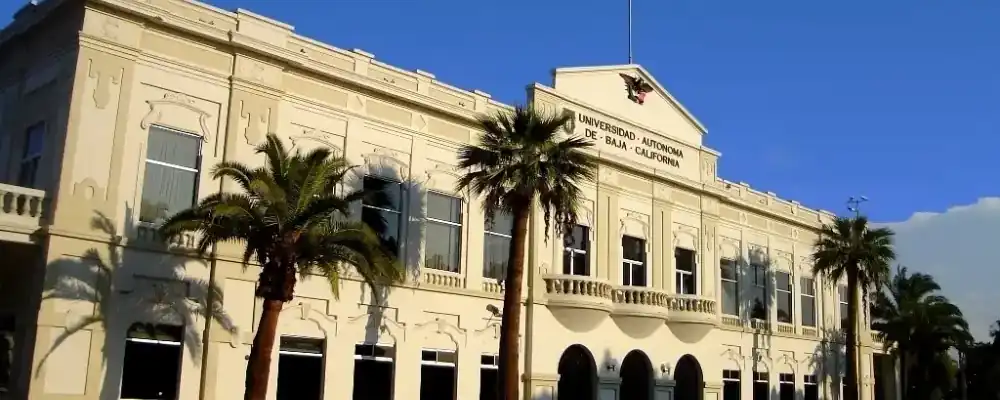
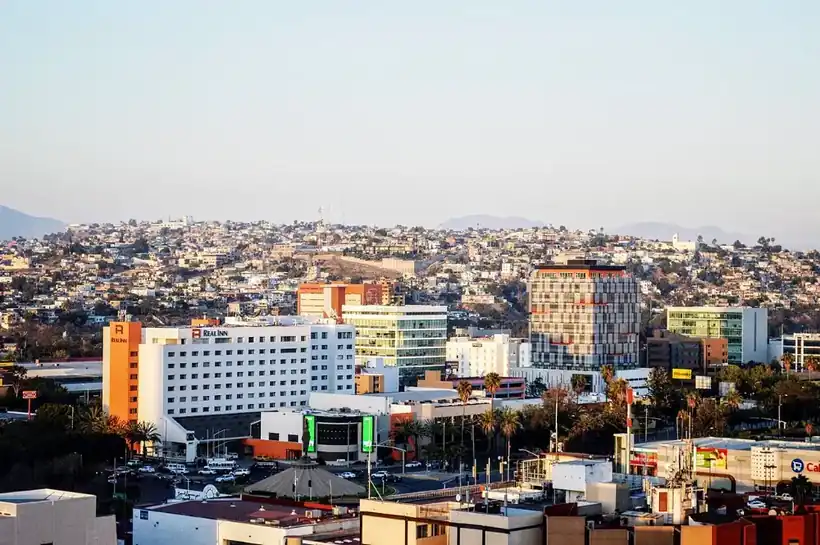
Under the 1848 Treaty of Guadalupe Hidalgo the land where Tijuana, Mexicali and Tecate now stand remained Mexican, and the border has shaped Baja California's economy ever since. Irrigation from the Colorado River turned the Mexicali Valley into an agricultural centre. The economy rests on tariff-free export manufacturing: in 2005, 284,255 people worked in the sector, and Medtronic and Baxter run plants in Tijuana. The Cerro Prieto geothermal field near Mexicali produces most of the electricity the state consumes. The Valle de Guadalupe, near Ensenada, is Mexico's main wine-producing area. The Cucapá, Kumiai, Paipai, Kiliwa and Cochimí are the native peoples, and the 2020 census counted 3,769,020 residents. The Universidad Autónoma de Baja California, founded in 1957, trains much of the workforce. 18

Who it suits
It suits a medical-device, electronics, or aerospace maker serving California, able to carry high wages and the top payroll tax, not heavy, low-value goods bound for Texas or a large water user. 5
The Pacific Border suits a company whose customers are in California, Arizona, or the western United States; whose product is valuable enough to carry high wages; and which needs regulated, skilled production that already exists here: medical devices above all, electronics, and aerospace in Mexicali and Sonora. It suits a company in a hurry, with a shelter and a standing building, and one with a large energy bill, given the Baja California tariff. It suits less well a heavy, low-value product bound for Texas or the Midwest; a labor-intensive plant that competes on wage; a company that needs large volumes of water; or one that can’t absorb the swings of USA trade policy, to which the medical-device and export plants here are directly exposed. Its labor market is less tight than its reputation suggests, with turnover falling and factory hiring slow, but the engineers, technicians, and supervisors a plant needs are still its scarcest workers.
What to check first
- Ask CFE in writing for a connection date at the site, and in Sonora and Nogales ask whether the line exists, not only the generation.
- Get the building’s water source in writing, and for a heavy user, gauge the town’s mood before the permit.
- Price the payroll at Baja California’s 4.25% tax and border minimum wage, and price the commute: map where your workers would live and how long the bus takes.
- Get current availability and rents from at least 2 brokers, since the vacancy figures moved fast in 2026.
- Get hourly crossing times at Otay Mesa or Nogales from your carrier and broker.
- And write down how much of the plan depends on a tariff decision in Washington.
Weighing Baja California for a plant, a warehouse or an office? Work with us.
Industry and plants
INEGI gave the state 17.3% of Mexico’s IMMEX export plants in July 2026, about 1,127, the most anywhere. Tijuana leads in medical devices, Mexicali in aerospace. 5
Lokus Data, processing IMSS records, counted 1,085,315 formal jobs in July 2026, up 7.0% on a year-over-year basis, the fastest of the 32. INEGI put unemployment at 2.9% in the second quarter of 2026, against 2.7 nationally, and informality at 36.2% against 55.1. 5
Output by sector, 2024
Share of the state’s output, current prices 16
- 46.5%Services +1.6% real, 2024
- 43.5%Industry: manufacturing, construction, energy, mining −1.1% real, 2024
- 2.5%Agriculture, livestock, fishing −15.3% real, 2024
- 7.5%Taxes on products, net
Among the 32, measure by measure
Each bar is one state, largest on the left, in the colour of its corridor; Baja California is the bright one with the white edge. 1 2 3 7 6
Beside its neighbours in the Pacific Border
Share of Mexico’s output, 2024
Exports, 2025
Formal private jobs, July 2026
Informal work, Q2 2026
Baja California against Mexico
Coloured: the state. Grey: the whole country.
Safety, taxes and incentives
INEGI found 3,017 businesses per 10,000 victimized in 2023, compared with 2,722 nationally, and the Mexico Peace Index 2026 ranks the state 28th of 32. The USA State Department’s advisory of May 29, 2026, sets Level 3, reconsider travel. 5
BHR’s January 2026 bulletin puts the payroll tax at 4.25%, Mexico’s highest headline rate; Chihuahua’s surcharges take its effective rate higher. IMCO’s 2026 index dropped the state 6 places to 17th. 5
Cities, ports, airports, crossings, power and water
Mexicali
The capital: 854,186 people (2020) 17
Tijuana
City: 1,810,645 people (2020) 17
Ensenada
City: 330,652 people (2020) 17
General Abelardo L. Rodríguez International Airport
International airport (TIJ) · 12,765,761 passengers in 2025 17
General Rodolfo Sánchez Taboada International Airport
International airport (MXL) · 1,277,953 passengers in 2025 17
Port of Ensenada
Commercial seaport 17
Tijuana-San Diego (Otay Mesa)
Border crossing: Tijuana, facing San Diego (Otay Mesa) · commercial trucks 17
Tecate-Tecate, California
Border crossing: Tecate, facing Tecate, California 17
Mexicali-Calexico (Calexico East)
Border crossing: Mexicali, facing Calexico (Calexico East) · commercial trucks 17
Power and water
CFE’s March 2026 tariff gave the Baja California division the cheapest peak energy of the 10 divisions Chapter 6 compares, 1.0904 pesos per kilowatt-hour. Water comes from the Colorado River, and the state is counting on Rosarito’s desalination plant. 5
Logistics and crossings
Otay Mesa took 990,111 northbound trucks in 2025, second to Laredo, according to the USA Bureau of Transportation Statistics. 5
Development pole
No federal development pole has been declared in Baja California. 5
The recent arrivals
- Mar 2020Constellation BrandsThe second is a decision that went wrong, the Constellation Brands brewery in Mexicali, stopped in March 2020 when about 70% built, which Chapter 7 describes as the water case. 8
Lokus Data’s average daily contribution wage was 745.78 pesos in July 2026, behind only Mexico City; the national average for all IMSS-insured workers was 673.9. 5
Book 6’s cost model prices only Monterrey, Querétaro and Mérida in full.
Rent per square metre, freight to your customers and the fully loaded cost of your own workforce are figures we prepare for each client, not numbers to publish: work with us.
Sources, each with its date
- INEGI, Encuesta Intercensal 2025 (people in private dwellings; median age from the tabulates), 22 Sep 2026 · link
- INEGI, PIB por Entidad Federativa 2024, current prices; share our arithmetic over the national 33,506,847 million pesos, 5 Dec 2025 · link
- INEGI, Exportaciones Trimestrales por Entidad Federativa, the four quarters of 2025 summed (our arithmetic), preliminary, 31 Mar 2026 · link
- Wikipedia, List of states of Mexico, citing INEGI (continental area, 2016), 22 Oct 2026 · link
- Book 6, Where to Go in Mexico, Part V, with the sources listed there, Nov 2026 · link
- INEGI, ENOE second quarter 2026, bulletin 503/26, as compiled in Book 6, Part V, 25 Aug 2026 · link
- IMSS open data as processed by Lokus Data (private formal jobs and average daily contribution wage; the national wage of 673.9 pesos covers all IMSS-insured workers), as compiled in Book 6, Jul 2026 · link
- Book 6, Where to Go in Mexico, chapter 14, The Pacific Border, with the sources listed there, Nov 2026 · link
- INEGI, quarterly state exports, bulletin 609/26, as compiled in Book 6, 30 Sep 2026 · link
- IMCO, Índice de Competitividad Estatal 2026, 21 Sep 2026 · link
- BHR, bulletin on state payroll-tax rates for 2026, as compiled in Book 6, Jan 2026 · link
- Institute for Economics and Peace, Mexico Peace Index 2026; USA Department of State travel advisory of 29 May 2026, 29 May 2026 · link
- INEGI, ENVE 2024 (businesses victimized in 2023, per 10,000), 10 Dec 2024 · link
- INEGI, ITAEE first quarter 2026 (change on a year), from Book 6, Figure VII.18, Nov 2026 · link
- Secretaría de Economía, foreign direct investment by state of destination, as reproduced by the Chamber of Deputies, Gaceta Parlamentaria, 14 Apr 2026 · link
- INEGI, PIB por Entidad Federativa 2024, the state's press release (shares at current prices, growth at constant prices; taxes on products are 100 less the three activities, our arithmetic), 5 Dec 2025 · link
- Wikipedia, the city, airport, port and crossing pages (EN and ES), read 3 November 2026, 3 Nov 2026 · link
- Wikipedia and the pages listed: Baja California (en); Baja California (es); Autonomous University of Baja California (en), 3 Nov 2026 · link
- Book 6, Where to Go in Mexico, chapter 12, The Landed Cost and Time to Production, State by State, Nov 2026 · link
Pictures
- Rectoria-uabc (cropped): Armenta isai, CC BY-SA 4.0, Wikimedia Commons
- Zona Rio Tijuana: Chiko elektriko, CC BY-SA 4.0, Wikimedia Commons